The Real Shift Behind Marketing Trends in 2026
In 2025, the rule was simple. Adapt or fall behind. Learn AI. Move faster. Experiment more.
In 2026, something unexpected happened. Everyone adapted.
AI tools are no longer the competitive advantage. They are the baseline. Every brand has access to the same automation tools, the same content generators, the same analytics dashboards. The playing field has flattened.
And that has created a new problem.
→ Feeds are oversaturated
→ Messaging sounds identical
→ Trust is harder to earn
→ Attention is shorter than ever
The brands winning in marketing trends in 2026 are not just moving fast. They are moving differently. They are clearer. More intentional. More system driven.
This blog breaks down 6 marketing trends that actually work right now in 2026, what has changed, and how you can adjust without burning out your team.
Trend 1: AI Is the Baseline, Judgment Is the Advantage
Why AI Alone No Longer Works
Let’s be honest.
You can spot AI written content within seconds. Perfect grammar. Predictable hooks. Emoji bullet lists. Over polished thought leadership.
In 2026, AI is not impressive. It is expected.
Many marketers admit that while AI has made content easier to produce, it has also made it harder to stand out. When everyone uses the same tools, differentiation disappears.
The competitive edge now is not who uses AI.
It is who uses it with taste and strategic judgment.
What Changed in Marketing Trends in 2026
Last year the question was:
How do we use AI?
This year the question is:
How do we use AI without sounding like everyone else?
Your thinking is the product.
AI just helps you ship faster.
How to Use AI Strategically in 2026
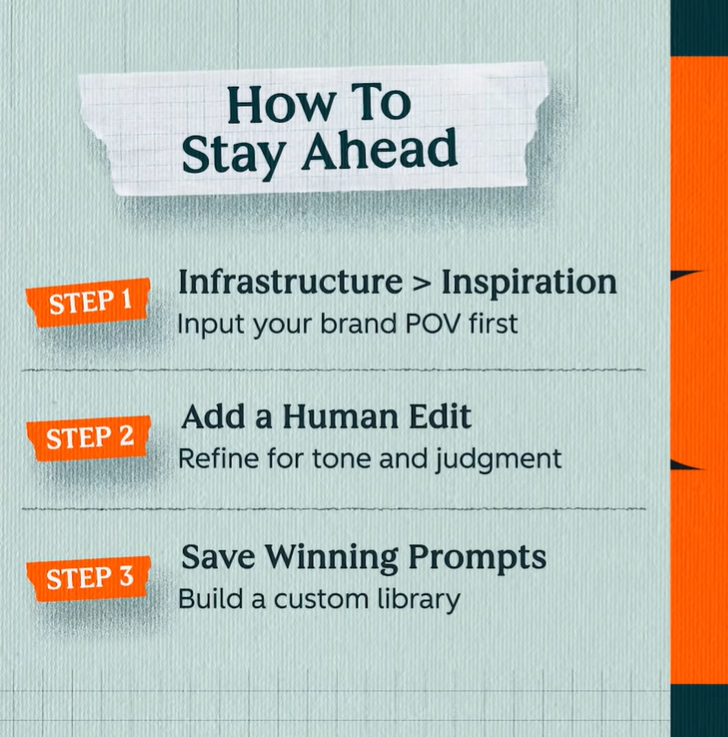
→ Prioritize Infrastructure Over Inspiration
Do not ask AI to be creative. Ask it to be organized.
Feed it:
• Your brand positioning
• Your tone guidelines
• Your customer pain points
• Your messaging pillars
The better the inputs, the stronger the outputs.
AI amplifies clarity. It does not create it.
→ Apply the Human Edit Rule
Before publishing, ask:
Does this sound generic?
Would 100 other brands post this exact sentence?
If yes, delete it.
Your audience can sense templated content immediately. Authenticity now requires friction. A human edit is not optional.
→ Build a Prompt Library
When you find a prompt that produces content aligned with your voice, save it.
Create a structured prompt system including:
• Brand context
• Audience details
• Tone specifications
• Formatting rules
Consistency beats improvisation.
In marketing trends in 2026, repeatable systems outperform random creativity.
Trend 2: Instant Clarity Wins the Sale
The Five Second Test
Open a homepage.
Give yourself five seconds.
Can you clearly explain what the company does and who it is for?
If not, they are losing revenue.
One of the biggest marketing trends in 2026 is clarity over cleverness. Many brands still lack a clearly defined unique value proposition. That creates confusion, and confusion kills conversion.
Recognition Is Not Enough
In 2025, the goal was brand awareness.
In 2026, the goal is instant understanding.
People decide faster now. If they cannot understand your value immediately, they move on.
Think about brands that are recognizable even without a logo. They maintain strong personality across every touchpoint. Website. Social media. App notifications. Email.
Consistency builds memory. Memory builds trust.
How to Improve Brand Clarity in 2026
→ Pass the Five Second Test
Show your homepage to someone unfamiliar with your business.
Ask them:
What does this company do?
Who is it for?
If they hesitate, simplify your copy.
→ Anchor Every Channel
Your:
• Social bios
• Email signatures
• Ad headlines
• Website hero section
Should all communicate the same core value statement.
Repetition is not boring. It is strategic.
→ Measure Conversions, Not Vibes
Stop asking if the brand feels aligned.
Start asking which headline drives signups.
Data clarifies what aesthetics cannot.
Among marketing trends in 2026, conversion driven messaging outperforms brand mood boards.
Trend 3: Publish With Intent, Not Volume
The Content Explosion Problem
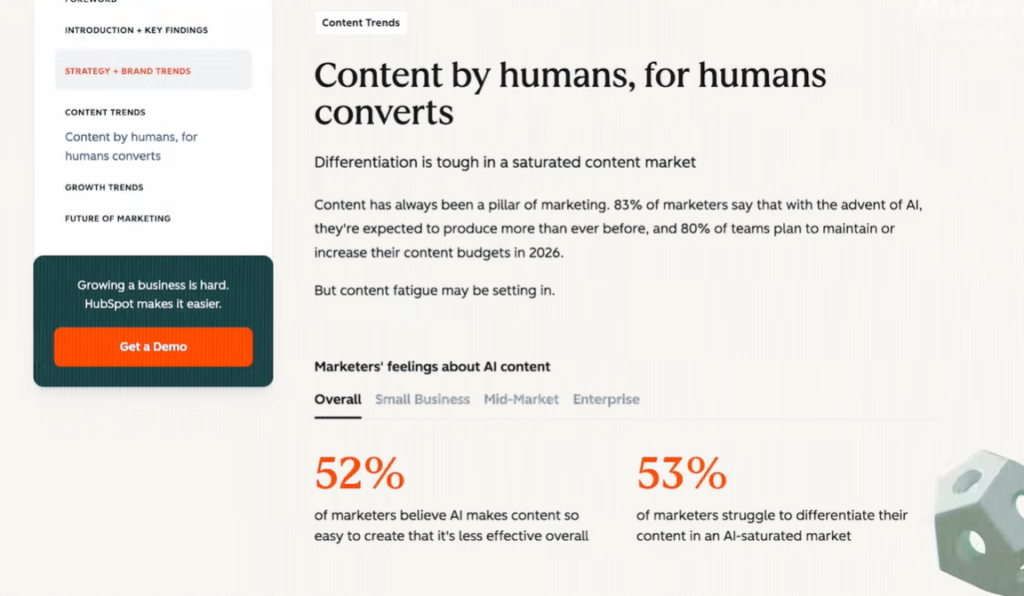
AI made content creation frictionless. That sounds positive. It is not always.
Teams are now publishing more than ever.
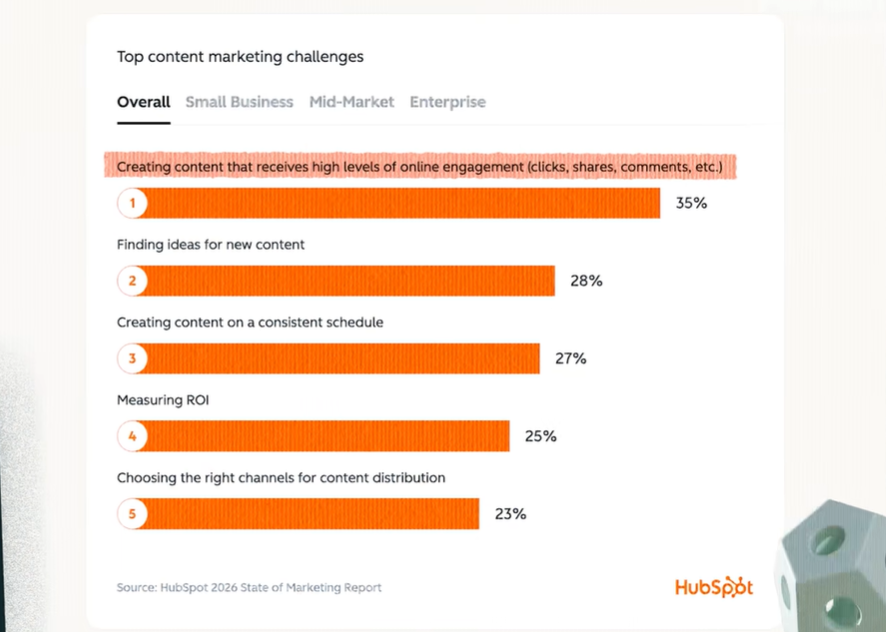
But engagement is not increasing at the same rate.
More content does not equal more impact.
In fact, excessive low quality content trains your audience to ignore you.
The New Question
In 2025:
How do we publish more?
In 2026:
Why are we publishing this at all?
Intentionality is one of the most powerful marketing trends in 2026.
How to Publish Strategically
→ Replace What Should We Post With Why Are We Posting
If the answer is because we have not posted today, stop.
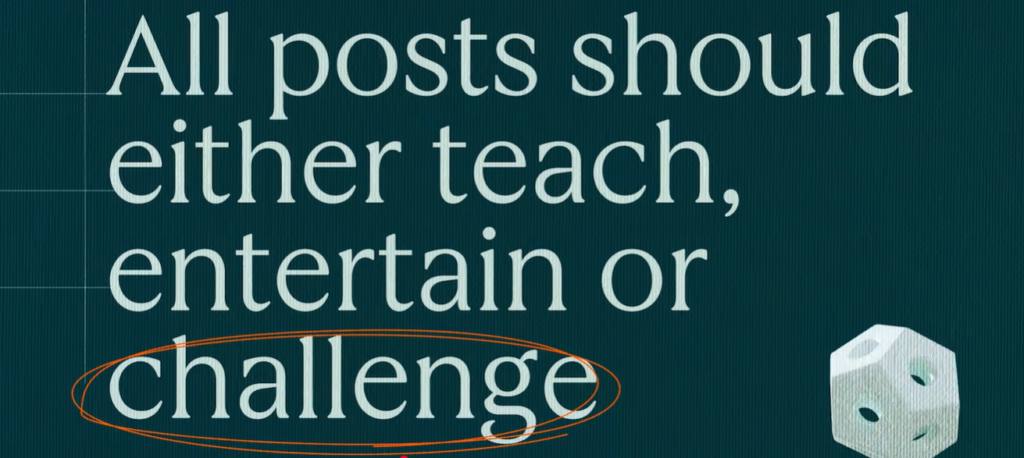
Every piece of content should serve one of three purposes:
• Teach
• Entertain
• Challenge a belief
If it does none of these, reconsider it.
→ Track Resonance Over Reach
10,000 views from the wrong audience is noise.
One qualified lead message is leverage.
Measure:
• Replies
• Direct messages
• Saves
• High intent clicks
Vanity metrics are fading in importance in marketing trends in 2026.
→ Set a Quality Standard
Create a checklist before publishing:
Does this provide actionable insight?
Does it reinforce our positioning?
Does it move someone closer to a decision?
If not, revise.
Trend 4: Short Form Gets Attention, Depth Builds Trust
Discovery Alone Is Not Enough
Short form video continues to perform well in 2026. It drives visibility. It captures attention. It fuels discovery.
But attention without depth does not create loyalty.
Trust requires repetition, proof, and substance.
The Compounding Model
Successful brands now operate with a layered system:
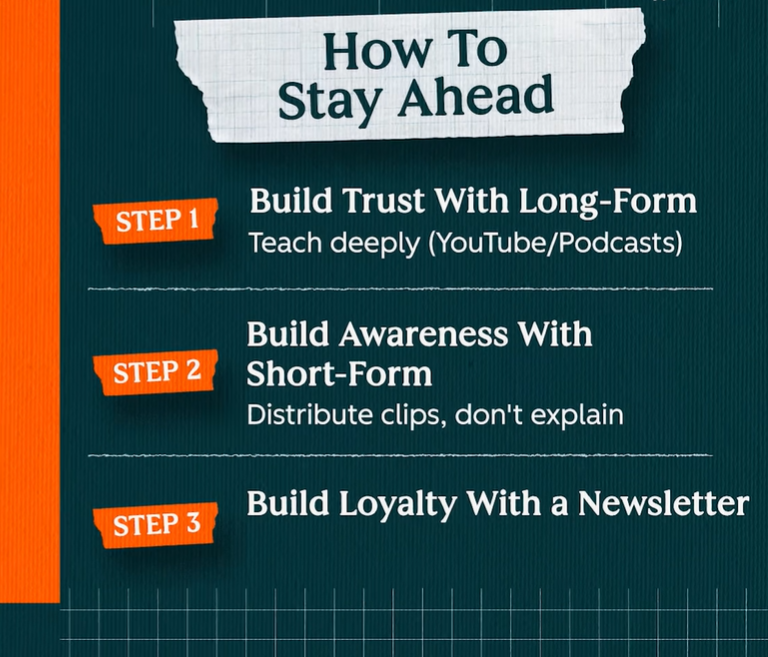
→ Short form content for reach
→ Long form content for credibility
→ Owned channels for retention
Owned channels include email newsletters, communities, and blogs. These are assets you control.
Why This Matters in Marketing Trends in 2026
Algorithms change. Platforms evolve.
Owned audiences remain stable.
Short form brings people in.
Long form deepens understanding.
Email builds habit.
Habit is what compounds into loyalty.
How to Build This System
→ Own One Depth Channel
Choose one platform for deeper content:
• Long form video
• Podcast
• In depth blog
Commit to consistency.
→ Use Short Form as a Gateway
Do not try to explain everything in 20 seconds.
Use short form to spark curiosity and direct viewers toward your deeper content.
→ Close the Loop With Email
Move your audience from their feed to their inbox.
Email remains one of the highest ROI channels. According to research available at https://www.litmus.com/resources/email-marketing-roi, email marketing continues to deliver strong returns compared to many paid channels.
Consistency builds familiarity. Familiarity builds trust.
Trend 5: Traditional Search Is Changing
AI Powered Answers Are Reshaping Traffic
How often do you search something and get the answer instantly without clicking a link?
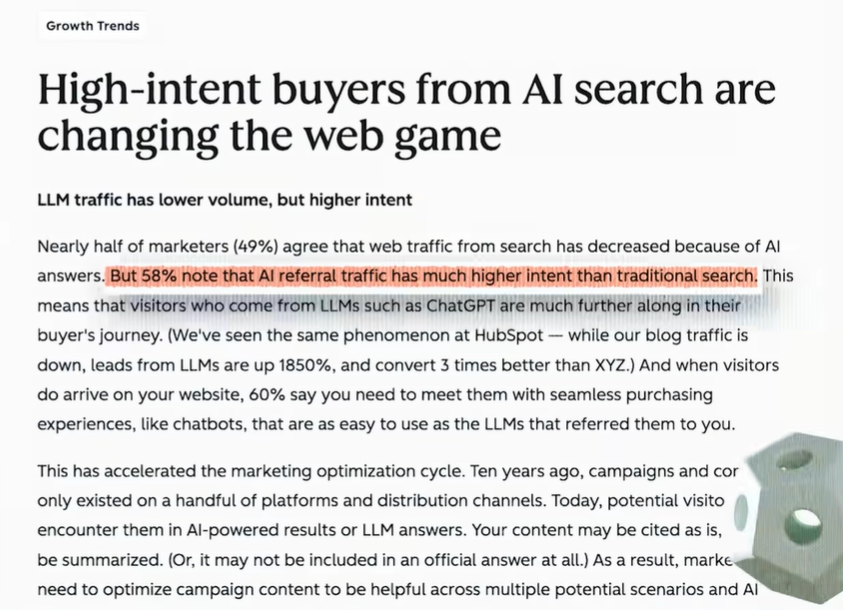
AI summaries are reducing traditional search traffic.
But the traffic that does come through now often has higher intent.
Visitors are not browsing casually. They are deciding.
What This Means for Marketing Trends in 2026
Ranking alone is not enough.
The new question is:
Where are decisions being influenced before someone visits your website?
People form opinions through:
• AI generated summaries
• Community discussions
• Creator reviews
• Social proof
Your brand needs visibility in those ecosystems.
How to Adapt
→ Lead With the Answer
Clarity increases the chance your content is referenced and trusted.
Avoid long introductions. Provide direct, useful information immediately.
→ Design for Decision Stage Visitors
Assume visitors have already researched alternatives.
Make it easy to:
• Understand pricing
• Book a demo
• See testimonials
• Compare features
Reduce friction.
One helpful resource on user experience clarity can be found at https://www.nngroup.com/articles/first-impressions-ux which explains how quickly users form opinions about websites.
→ Optimize for Authority Signals
Publish content that demonstrates expertise.
Encourage reviews.
Earn mentions.
Authority matters more than raw traffic volume in marketing trends in 2026.
Trend 6: Speed of Learning Beats Perfect Planning
The Old Model
Launch campaign.
Wait one month.
Review performance.
Request approval.
Make changes.
By the time adjustments happen, the opportunity is gone.
The 2026 Model
Launch.
Measure quickly.
Adjust immediately.
Repeat weekly.
Top performing teams are not necessarily more creative. They are faster at learning.
The Loop System
A modern marketing loop looks like this:
→ Launch fast
→ Gather data
→ Identify patterns
→ Optimize live campaigns
→ Reinvest in what works
Small improvements compound faster than entirely new campaigns.
How to Build a Faster System
→ Centralize Data
Avoid tracking performance across disconnected tools.
When email, social, and website analytics are unified, insights become clearer.
→ Shorten Feedback Cycles
If a subject line performs well, test a similar concept in ads immediately.
Weekly reviews outperform monthly reports.
→ Optimize Before Expanding
Before launching something new, ask:
Can we improve what is already running?
Iteration compounds.
Among all marketing trends in 2026, this may be the most underrated advantage.
Pulling It All Together
The biggest misconception about marketing trends in 2026 is that success requires doing more.
In reality, it requires doing fewer things with greater clarity and stronger systems.
Let’s summarize the six marketing trends that actually work right now in 2026:
1. AI is expected. Human judgment differentiates.
2. Instant clarity converts faster than creativity.
3. Intentional content beats high volume posting.
4. Short form attracts. Depth and email build loyalty.
5. Decision stage visibility matters more than traffic volume.
6. Fast learning loops outperform perfect strategies.
The Bigger Question
A year from now, when you evaluate your marketing results, what will you see?
More tools?
More posts?
More effort?
Or
Clear positioning
Repeatable systems
Compounding trust
Faster optimization cycles
The brands evolving in marketing trends in 2026 are not chasing every new tactic. They are building calm, structured systems that keep working even when they are not actively pushing every day.
Final Thoughts on Marketing Trends in 2026
The era of experimentation is over.
The era of refinement has begun.
AI is powerful.
Content is abundant.
Attention is limited.
Clarity wins.
Depth compounds.
Speed of learning accelerates growth.
If you start applying even two of these six marketing trends that actually work right now in 2026, you will already be ahead of most competitors who are still stuck in output mode.
Marketing in 2026 is not about keeping up.
It is about evolving with intention.
FAQ
1. What are the most important marketing trends in 2026?
The most important marketing trends in 2026 focus on clarity, speed of learning, intentional content, AI with human judgment, depth driven trust, and decision stage optimization. The 6 marketing trends that actually work right now in 2026 are less about doing more and more about building structured systems.
2. Why is AI no longer a competitive advantage in marketing trends in 2026?
In marketing trends in 2026, AI is considered a baseline tool. Since every brand has access to similar AI tools, the advantage now comes from strategic thinking and human judgment rather than automation itself.
3. How should businesses use AI according to marketing trends in 2026?
Marketing trends in 2026 suggest using AI for organization and execution, not creativity alone. Brands should feed AI clear positioning, tone, and messaging pillars so that outputs align with their identity.
4. What does “judgment is the advantage” mean in marketing trends in 2026?
It means that while AI can generate content quickly, only human insight can ensure differentiation. In marketing trends in 2026, strategic taste and editing create the real edge.
5. Why does AI generated content often fail in 2026?
AI generated content often sounds generic. One key shift in marketing trends in 2026 is that audiences quickly recognize templated messaging, which reduces trust and engagement.
6. What is the Five Second Test in marketing trends in 2026?
The Five Second Test refers to checking whether someone can understand what your company does within five seconds. In marketing trends in 2026, instant clarity directly impacts conversions.
7. Why is clarity more important than creativity in marketing trends in 2026?
Marketing trends in 2026 prioritize clear communication over clever messaging. Buyers make faster decisions, and confusion leads to lost opportunities.
8. How can brands improve clarity in 2026?
According to marketing trends in 2026, brands should simplify homepage messaging, unify communication across channels, and ensure their value proposition is instantly understandable.
9. Why is content volume not enough in marketing trends in 2026?
Publishing more content does not guarantee better results. Marketing trends in 2026 emphasize intentional publishing rather than high volume output.
10. What is the biggest mistake marketers are making in 2026?
One major mistake in marketing trends in 2026 is focusing on reach instead of resonance. High impressions without meaningful engagement waste resources.
11. What does “publish with intent” mean in marketing trends in 2026?
In marketing trends in 2026, publishing with intent means every piece of content should teach, entertain, or challenge a belief. Content without purpose reduces brand authority.
12. How should businesses measure performance in 2026?
Marketing trends in 2026 recommend tracking replies, direct messages, conversions, and high intent clicks rather than vanity metrics like impressions.
13. Why is short form content not enough in marketing trends in 2026?
Short form content drives visibility, but marketing trends in 2026 show that trust requires depth, consistency, and repetition over time.
14. What role does long form content play in marketing trends in 2026?
Long form content builds credibility. Among the 6 marketing trends that actually work right now in 2026, depth driven content strengthens authority and trust.
15. Why are owned channels important in marketing trends in 2026?
Owned channels like email and blogs provide stability. Marketing trends in 2026 highlight that algorithms change, but owned audiences remain valuable assets.
16. How does email marketing fit into marketing trends in 2026?
Email helps turn casual attention into consistent engagement. In marketing trends in 2026, email builds habit, and habit builds loyalty.
17. Is traditional search declining in marketing trends in 2026?
Traditional search traffic is evolving. Marketing trends in 2026 show that AI summaries provide answers instantly, reducing clicks but increasing intent among visitors who do click.
18. How should brands adapt to AI powered search in 2026?
Marketing trends in 2026 suggest leading with direct answers, optimizing for authority signals, and ensuring clarity so content can be referenced in AI summaries.
19. What does “decision stage visibility” mean in marketing trends in 2026?
It refers to being visible when buyers are ready to choose. Marketing trends in 2026 emphasize optimizing for high intent traffic rather than raw traffic numbers.
20. Why is authority more important than traffic in 2026?
In marketing trends in 2026, authority signals such as reviews, mentions, and expert content influence decisions more than sheer visitor numbers.
21. What is the marketing loop system in 2026?
The marketing loop system involves launching fast, analyzing data quickly, optimizing campaigns, and reinvesting in what works. It is a core principle in marketing trends in 2026.
22. Why do fast feedback cycles matter in marketing trends in 2026?
Markets move quickly. Marketing trends in 2026 show that weekly optimization outperforms monthly reporting cycles.
23. How can teams reduce burnout while following marketing trends in 2026?
By building repeatable systems instead of constantly creating new campaigns. Marketing trends in 2026 reward refinement over constant experimentation.
24. What does “AI amplifies clarity” mean?
In marketing trends in 2026, AI enhances what already exists. If positioning is unclear, AI will only scale confusion.
25. Why are repeatable systems critical in marketing trends in 2026?
Repeatable systems ensure consistent performance. Among the 6 marketing trends that actually work right now in 2026, system driven execution stands out.
26. How can brands stand out in oversaturated feeds in 2026?
Marketing trends in 2026 suggest focusing on strong positioning, distinct voice, and depth driven education rather than copying popular formats.
27. What is the difference between awareness and understanding in 2026?
Awareness means people recognize your brand. Understanding means they immediately know what you offer. Marketing trends in 2026 prioritize understanding.
28. Why is resonance more valuable than reach in 2026?
In marketing trends in 2026, meaningful engagement from the right audience generates higher ROI than mass exposure.
29. How should brands design websites in 2026?
Websites should assume visitors are decision ready. Marketing trends in 2026 emphasize visible pricing, testimonials, and clear calls to action.
30. What are the 6 marketing trends that actually work right now in 2026?
They include AI with human judgment, instant clarity, intentional publishing, depth based trust building, decision stage optimization, and rapid learning loops.
31. Why is experimentation no longer enough in marketing trends in 2026?
In 2025, experimentation was essential. In marketing trends in 2026, refinement and optimization are more important than constant testing.
32. How can businesses avoid sounding generic in 2026?
Marketing trends in 2026 recommend using brand guidelines, structured prompts, and strong human editing before publishing.
33. Why is brand consistency critical in 2026?
Consistency builds memory, and memory builds trust. Marketing trends in 2026 reward brands that communicate the same core message across channels.
34. How does attention span impact marketing trends in 2026?
Attention is shorter, so messaging must be clear immediately. Marketing trends in 2026 demand concise value communication.
35. What does “optimize before expanding” mean?
Before launching new campaigns, improve existing ones. Marketing trends in 2026 show that iteration compounds results faster than starting from scratch.
36. Why are structured prompt libraries useful in 2026?
They create consistency and save time. In marketing trends in 2026, systemized AI usage outperforms random experimentation.
37. How can marketers build trust in 2026?
Trust is built through depth, repetition, proof, and authority. Marketing trends in 2026 emphasize long term credibility over short term virality.
38. Are vanity metrics still relevant in marketing trends in 2026?
Vanity metrics are less important. Marketing trends in 2026 focus on conversions, qualified leads, and revenue impact.
39. What mindset shift is required for marketing trends in 2026?
Marketers must shift from output mode to optimization mode. The 6 marketing trends that actually work right now in 2026 prioritize refinement over expansion.
40. What is the biggest takeaway from marketing trends in 2026?
The biggest takeaway is that success does not require more tools or more posts. Marketing trends in 2026 reward clarity, depth, systems, and fast learning cycles over noise and volume.
