Most beginner advice is stuck in the 2020 playbook: learn SQL, learn Python, learn a BI tool, build a couple dashboards, apply everywhere.
Those skills still matter. But they are no longer enough on their own.
In 2026, the market is separating data analysts into two buckets:
- Report builders who pull numbers, update dashboards, and react to requests
- Decision partners who clarify the real question, shape the analysis, translate results into actions, and measure business impact
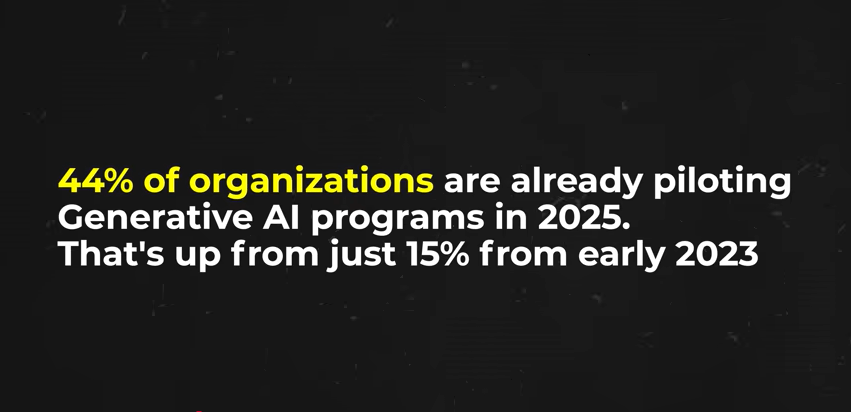
AI and modern analytics platforms are accelerating routine work. That does not eliminate the analyst role. It raises the bar on what “good” looks like. The World Economic Forum continues to highlight data and AI related work as a major area of job transformation, with growing demand for analytical thinking and human judgment alongside technical capability.
So if you want to be employable and promotable in 2026, your goal is simple:
Become the analyst who turns data into decisions, not the analyst who turns data into charts.
Below are the five skill areas that consistently separate high value analysts from everyone stuck in the tutorial loop, plus a practical way to master them through real work.
Skill 1: Data storytelling and business context
Dashboards are not the output. Decisions are the output.
A chart can be correct and still be useless if nobody understands:
- why it matters
- what caused it
- what should happen next
Most companies are not starving for data. They are drowning in it. The competitive advantage comes from analysts who can create clarity.
What “data storytelling” actually means in 2026
Data storytelling is not making visuals pretty. It is a structured way to move a stakeholder from “what is happening” to “what we should do.”
A strong story usually includes:
- Decision first
- “We should shift spend from Channel A to Channel B.”
- Why now
- “Because CAC rose 18% in the last 3 weeks and conversion quality dropped.”
- Evidence
- What changed, where, and for whom (segments, regions, product lines)
- Drivers
- Root causes and contributing factors, not just correlation
- Trade offs
- What you gain, what you risk, what you stop doing
- Next actions
- A short plan: owner, timeline, measurement
The “reporting vs impact” rewrite
Weak analyst update:
- “Sales dropped 10% last month.”
Decision partner update:
- “Sales dropped 10% because returning customers fell in Segment X after pricing changes. If we reverse the price increase for that segment and adjust bundling, we can recover volume without hurting margin.”
Same data. Totally different value.
How to practice storytelling fast
Do this every time you finish an analysis:
- Write a one page insight memo:
- Context: what decision this supports
- Findings: 3 bullets max
- So what: why it matters in business terms
- Now what: 2 recommended actions
- How we’ll measure: 1–3 metrics
If you can’t explain your dashboard in a one page memo, you don’t own the analysis yet.
Skill 2: SQL that enables speed, plus workflow automation
SQL is still foundational. But in 2026, the advantage is not “knowing SQL.” The advantage is:
- writing SQL that answers business questions cleanly
- building workflows that reduce repetitive work
- designing outputs that are reliable and reusable
The new expectation
Many teams want analysts who can:
- pull data directly when needed
- create reusable query logic (views, clean CTE patterns)
- partner with engineers using consistent definitions
- reduce “manual reporting” time through automation
AI can help you write queries faster, but it cannot guarantee correctness. That is why validation skill matters (we’ll cover that under AI fluency).
SQL mastery checklist for analysts
If you want to be taken seriously, you should be comfortable with:
Core
- SELECT, WHERE, GROUP BY, HAVING
- CASE WHEN
- JOINs (inner + left as a must)
Business ready outputs
- cohort style queries (retention, repeat rate)
- funnel breakdowns
- segmentation logic
- budget vs actual style rollups
Advanced but high ROI
- CTEs for readable logic
- window functions: ROW_NUMBER, RANK, running totals
- “sanity checks” (row counts, duplicates, null behavior)
Automation that makes you valuable
Automation does not mean becoming a data engineer. It means removing boring repeat work like:
- copying spreadsheets
- weekly refresh messaging
- manual file pulling
- recurring report packaging
A simple automation case study can be a standout portfolio item because most beginners do not show it.
Example automation wins
- Auto ingest form submissions into a clean table
- Auto alert a team when refresh fails
- Auto generate weekly KPI summary text from a dataset
- Auto archive exports with consistent naming
In 2026, “fast and reliable” beats “fancy.”
Skill 3: AI fluency (and AI validation)
AI is not your replacement. It is your leverage.
But only if you treat it correctly:
- AI is great at drafts, summaries, pattern suggestions, and boilerplate
- AI is weak at truth, context, and accountability unless you force structure
MIT linked research and reporting has emphasized how hard it is for enterprises to convert generative AI pilots into real business value, often for reasons that are strategic and organizational rather than purely technical.
MIT CSAIL has also pointed out practical economic limits to automation, meaning many tasks are not simply “replaced” even if they are technically automatable.
So the winning analyst is not “anti AI” or “AI dependent.” The winning analyst is:
AI assisted, validation obsessed.
What AI fluency looks like for analysts
You should be able to use AI to:
- generate first pass SQL and then verify it
- draft analysis plans and edge case checks
- produce stakeholder friendly summaries
- help document metric definitions
- accelerate repetitive transformations and text work
Validation is the differentiator
A lot of professionals still spend meaningful time fixing AI output. For example, a Zapier survey reported most enterprise AI users revise AI generated outputs, with only a small minority saying they never revise.
In software contexts, surveys have also shown many developers do not consistently verify AI generated code even while expressing low trust, highlighting “verification debt.”
The exact percentages vary by study, but the direction is consistent: unchecked AI output creates risk.
The analyst AI validation protocol
Whenever AI generates anything that touches decisions, use this checklist:
- Source check
- What tables, fields, time windows, filters were used?
- Logic check
- Are joins correct?
- Is aggregation level consistent?
- Any double counting risk?
- Sanity check
- Do totals match known benchmarks?
- Do row counts make sense?
- Edge case check
- Nulls, refunds, returns, cancellations, duplicates, timezone issues
- Explainability check
- Can you explain the result without the AI?
If you cannot explain it, you cannot ship it.
Skill 4: Specialized domain knowledge with a T shaped profile
This is where many analysts lose.
They learn tools, but they do not learn business.
And in 2026, business context is where humans still win.
Generalists vs specialists
If you are purely generalist, your work risks becoming “surface level.”
If you are purely specialist, you risk becoming narrow and missing bigger drivers.
The best profile is T shaped:
- broad fundamentals across analytics
- deep expertise in one domain or function
Pick a lane (and learn its language)
Choose one of these to go deep first:
Functions
- marketing
- finance
- sales
- operations
- supply chain
- customer experience
Domains
- healthcare
- fintech
- ecommerce
- retail
- manufacturing
- energy
Then learn:
- the top KPIs and definitions
- the “why” behind those KPIs
- the common levers teams pull to change outcomes
- what trade offs matter
Example: marketing analyst depth
- CAC, LTV, ROAS, conversion rate, retention
- attribution basics
- funnel drop off drivers
- creative fatigue and channel mix
A marketing analyst who understands the business mechanics will beat a generalist who only knows SQL.
Skill 5: Measuring ROI and business impact
Dashboards do not get promotions. Measurable impact does.
Companies fund what they can justify. Leaders promote analysts who can connect work to outcomes.
The simplest ROI framing
You do not need fancy finance to start.
Use this structure:
- What changed?
- What did it save or earn?
- What did it cost to implement?
- What is the payback period?
Even a basic estimate is better than none, as long as you document assumptions clearly.
Translate your work into executive language
Instead of:
- “Engagement increased 15%.”
Say:
- “Engagement increased 15%, which raised qualified leads by 9% and produced an estimated $X in pipeline value at current conversion rates.”
Your goal is always to map analysis to one of these:
- revenue
- cost
- risk
- time saved
- customer outcomes
If you can speak that language, you stop being a reporting resource and become a business partner.
The mastery method: how to actually build these skills
Certificates are not useless, but they are not enough. Mastery comes from repetition under realistic conditions.
Use this five step loop:
Step 1: Learn fundamentals (the thinking, not just syntax)
- how data flows
- how metrics are defined
- how decisions get made
Step 2: Build real projects (not tutorials)
Real projects have:
- messy data
- unclear questions
- stakeholder constraints
- trade offs
- imperfect answers
Step 3: Get feedback and iterate
- post your work
- ask for critique
- tighten definitions
- improve clarity
Step 4: Teach what you learn
If you can explain simply, you understand deeply.
Write:
- short case studies
- insight memos
- project walkthroughs
Step 5: Package proof
Your portfolio should show:
- your thinking
- your communication
- your decisions
- your impact framing
This is what hiring managers want in 2026: evidence that you can operate in reality.
A 2026 ready skills blueprint (quick reference)
If you want the shortest “what to focus on” list:
- Data storytelling: insight memos + decision framing
- SQL: business questions, joins, windows, sanity checks
- Automation: reduce repetitive reporting work
- AI fluency: prompt + validate + document
- Domain depth: pick a lane, learn KPIs, learn levers
- ROI framing: tie work to revenue, cost, risk, time
If you build those six with real proof, you are not competing with “dashboard builders.” You are competing for roles that actually grow.
Data Analyst Skills FAQs for 2026
1. Are data analyst jobs still relevant in 2026?
Yes. Data analyst roles are still relevant in 2026, but the role has evolved. Analysts who only build dashboards are struggling, while analysts who turn data into decisions are in demand.
2. What is the biggest mistake beginners make when learning data analytics?
The biggest mistake is focusing only on tools like SQL, Python, and BI dashboards without learning how to translate data into business decisions.
3. Is learning SQL still important for data analysts?
Yes. SQL is still foundational, but knowing syntax alone is not enough. Analysts must use SQL to answer real business questions accurately and efficiently.
4. What separates a report builder from a decision partner?
Report builders react to requests and deliver charts. Decision partners clarify the real question, explain drivers, recommend actions, and measure business impact.
5. What does data storytelling mean in 2026?
Data storytelling means guiding stakeholders from “what happened” to “what should we do next” using structured, decision-focused communication.
6. Are dashboards still important for data analysts?
Dashboards are important, but they are not the final output. Decisions and actions are the real output.
7. Why do many dashboards fail to create impact?
Dashboards fail when they lack context, explanation, and clear recommendations tied to business goals.
8. How can a beginner practice data storytelling?
By writing one-page insight memos that explain context, findings, why it matters, recommended actions, and how success will be measured.
9. Is Python required for all data analyst roles?
No. Python expands opportunities but is not mandatory for every role. Business understanding and communication often matter more.
10. What SQL skills matter most for analysts in 2026?
Joins, CTEs, window functions, segmentation logic, cohort analysis, and validation checks matter more than complex syntax memorization.
11. What does “SQL for business questions” mean?
It means writing queries that clearly answer questions like growth, retention, funnel performance, and budget vs actual comparisons.
12. How important is automation for data analysts?
Very important. Analysts who reduce repetitive reporting work through automation are more valuable and scalable.
13. Do data analysts need to become data engineers?
No. Analysts do not need full engineering skills, but they should understand data flow, pipelines, and reliability basics.
14. What kind of automation should analysts focus on?
Simple automations such as report refresh alerts, file ingestion, KPI summaries, and recurring exports.
15. Will AI replace data analysts?
No. AI accelerates routine tasks, but human judgment, context, and accountability remain essential.
16. What does AI fluency mean for analysts?
AI fluency means using AI to speed up work while validating outputs before they influence decisions.
17. Why is AI validation critical for analysts?
Because AI can confidently produce incorrect results, and analysts are responsible for accuracy and trust.
18. How should analysts validate AI generated work?
By checking data sources, logic, aggregation levels, sanity checks, edge cases, and explainability.
19. Is it safe to rely on AI generated SQL?
Only if the analyst fully verifies joins, filters, and calculations before using the output.
20. What is a T-shaped data analyst?
A T-shaped analyst has broad analytics fundamentals with deep expertise in one domain or function.
21. Why is domain knowledge important in 2026?
Because business context allows analysts to interpret data correctly and recommend meaningful actions.
22. Should beginners specialize early?
Yes. Picking one domain or function early helps differentiate you from generalists.
23. Which domains are valuable for data analysts?
Marketing, finance, healthcare, fintech, ecommerce, supply chain, and operations are high-impact domains.
24. What KPIs should a marketing analyst understand?
CAC, LTV, ROAS, conversion rates, retention, attribution, and funnel drop-offs.
25. Can generalist analysts still succeed?
Yes, but only if they develop enough domain depth to move beyond surface-level analysis.
26. What does business impact measurement mean?
It means connecting analysis to outcomes like revenue, cost savings, risk reduction, or time saved.
27. Do analysts need finance knowledge to measure ROI?
Only basic finance concepts. Clear assumptions and simple ROI framing are enough to start.
28. Why do many analysts struggle to get promoted?
Because they report metrics but do not show how their work impacts business results.
29. How should analysts communicate impact to executives?
By translating insights into revenue, cost, risk, or efficiency outcomes instead of technical metrics.
30. Are certifications enough to get hired?
No. Certifications without real projects and proof of thinking rarely lead to offers.
31. What kind of projects stand out in 2026?
Projects with messy data, unclear questions, trade-offs, stakeholder constraints, and documented decisions.
32. Why are tutorial projects less effective now?
Because hiring managers have seen them repeatedly and they do not demonstrate independent thinking.
33. How important is communication for data analysts?
Critical. Clear communication often matters more than advanced technical complexity.
34. Should analysts write about their work?
Yes. Writing insight memos and case studies strengthens thinking and shows credibility.
35. What should a data analyst portfolio show?
Thinking process, assumptions, decisions, communication clarity, and business framing.
36. Is speed more important than complexity in analytics?
Yes. Fast, reliable answers often create more value than complex but slow analysis.
37. What mindset shift do beginners need in 2026?
Stop chasing tools and start focusing on solving business problems with data.
38. How long does it take to become job ready?
Typically four to six months of consistent, focused work with real projects.
39. What makes an analyst “AI ready”?
Using AI as an assistant while maintaining ownership of logic, accuracy, and decisions.
40. What is the ultimate goal for a data analyst in 2026?
To become a decision partner who turns data into actions, not just charts.
